Buying a home is a decision made now with consequences that can last for years. Yet it is natural to focus mainly on our present needs when beginning a search.
How many bedrooms? How large a living room? Do we need a garden or garage? How far is work? Are amenities convenient? What can we afford?
These are necessary questions, but they should not be the only ones.
A home may stay with us for ten, fifteen or twenty years. Much can change during that time.
The home we buy today must also work for tomorrow
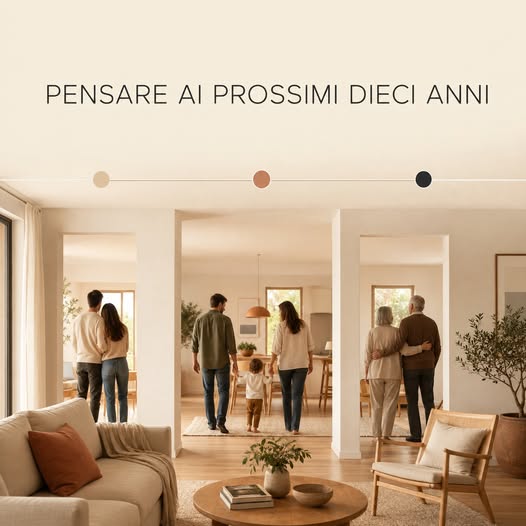
Consider how life might change over ten years.
A family may grow, or children may need more independence. Work may change, perhaps requiring a home office or a different daily commute.
An older parent may need support. We may prefer less maintenance and more convenience. Stairs that are easy at forty can become less appealing later. A large garden may eventually demand more time and expense than we want.
Even the location can feel different.
A remote home may suit a car-based lifestyle and a desire for peace. Ten or fifteen years later, proximity to shops, a pharmacy, public transport, schools or healthcare may matter much more.
We cannot predict the future.
We can, however, buy a home that leaves room for it.
The value of flexibility
When helping someone search, I consider not only what a property is today, but what it could become.
A secondary room might become an office, a child’s room, guest accommodation or space for caring for a relative.
A sensible, adaptable layout can accommodate change without major rebuilding. Easy access, a lift or living mainly on one floor may seem secondary now and become important later.
The same applies outdoors. Bigger is not always better: a manageable, genuinely useful outdoor space can work better over time than a very large garden.
Quality is therefore about how well the available space can adapt, as well as how much there is.
A home should adapt to life
One mistake is falling in love with a specific feature without considering its lasting usefulness.
Buying is emotional. We imagine meals with friends, children in the garden or time on a peaceful terrace.
That matters. A home is more than its floor area.
But because the purchase affects our lives and often a substantial part of our wealth, enthusiasm should be accompanied by reflection.
Do not ask only:
“Would I enjoy living here today?”
Also consider:
“Is this home flexible enough to accommodate changes in my life?”
These questions do different jobs.
One captures the present; the other considers how the home may work over time.
Thinking ahead includes the possibility of resale
Resale is another aspect that is often underestimated.
Life may move in an unexpected direction.
A job move, a different household, a wish for more or less space, or simply changing preferences may make another home more suitable.
Then another question matters:
If I wanted or needed to sell, how readily might this property find another buyer?
I consider that an important part of the decision.
The purchase price is only one aspect of the asset we are adding to our lives and finances.
Location, access, layout, amenities, construction, maintenance and adaptability can influence future market appeal.
No one can know a home’s precise value in ten years. We can still ask whether its qualities may remain attractive to people other than ourselves.
That distinction matters.
A home can suit us perfectly while appealing to a narrow market. That need not rule it out, but it should be understood.
Buying well means keeping options open
Thinking ten years ahead is not a search for perfection.
It means looking for a property that keeps options open.
Options to change the spaces.
Options to adapt to new needs.
Options to continue living comfortably as habits change.
And, if necessary, the option to sell without discovering too late that a feature we overlooked limits many buyers’ interest.
Good property advice should go beyond matching a list of present requirements.
It should help consider what the home could mean over time.
The decision belongs to the buyer; the adviser can raise factors that excitement might otherwise obscure.
A question to take to your viewing
At a viewing, try a simple exercise.
Step outside the present for a moment.
Imagine living in this home ten years from now.
Would the rooms still suit you? Could the layout change? Would maintenance remain manageable? Would the location work? Could spaces serve new purposes?
If life changed completely, would you still have the freedom to change with it?
Perhaps that is a valuable quality in a home: the ability to support an important choice without making it unnecessarily rigid.
The right home does not need to predict your future.
It should leave you space to build it.
Before buying, ask:
“Does this home meet my needs today?”
Then add:
“Could it still welcome me when my life changes?”
And perhaps:
“If it stopped being right for me, could it become right for someone else?”
Three simple questions can change how we assess a property.
Buying a home means choosing where to place an important part of our life and resources for the years ahead.
What change might most affect your housing needs over the next ten years?