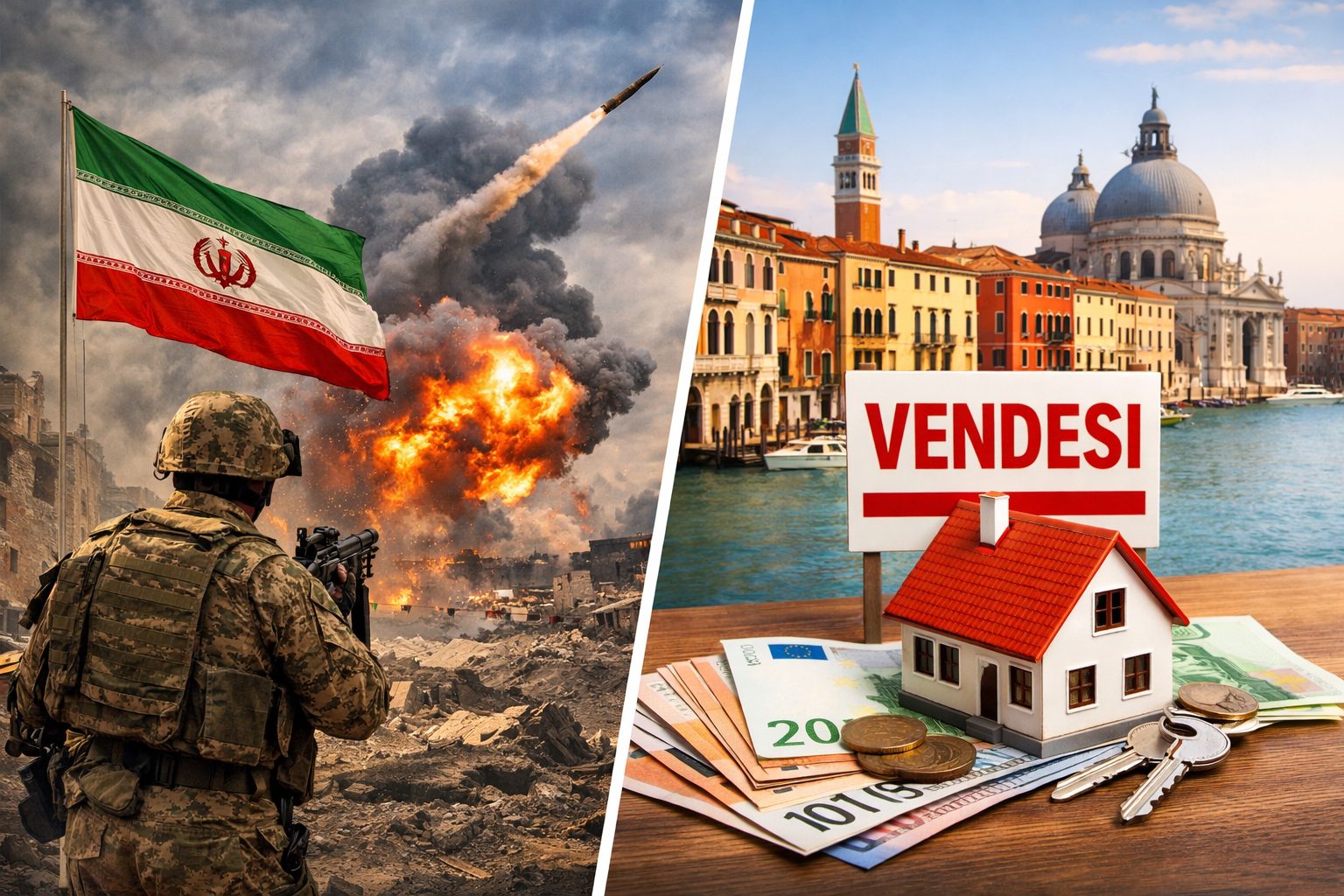
War and international tensions can seem remote from everyday life in Italy, yet a Middle Eastern conflict can affect household bills, borrowing and property decisions.
This archive article considers tensions involving Iran and the risk of an energy shock. Higher oil prices and economic uncertainty can also affect property markets; it describes scenarios rather than a live news assessment.
What could this mean for homes in Italy? Would prices weaken, and how resilient might property be?
Consider the possible channels.
Property markets are linked to the wider economy.
An international crisis can trigger a chain of economic effects:
- Higher oil prices,
- more expensive energy,
- higher inflation,
- higher interest rates,
- and more expensive mortgages.
These factors can influence a household's ability to buy a home.
When repayments and living costs rise, some households postpone a purchase.
That can reduce transaction activity.
Oil and energy
The Middle East is an important oil-producing region. Geopolitical disruption can raise concerns about supplies.
One possible consequence is a rise in oil prices.
For energy-importing countries such as Italy, this can mean:
- higher household bills,
- higher business costs,
- and more inflationary pressure.
Spending more on energy, fuel and essentials can leave less money for a major purchase such as a home.
Possible effects on mortgage costs
Interest rates provide another indirect link.
If inflation rises, the European Central Bank may keep policy tighter for longer in pursuit of price stability.
Mortgage pricing can respond, depending on the loan type and market expectations.
Possible consequences include:
- higher monthly repayments,
- tighter access to credit,
- and fewer new mortgages.
Higher borrowing costs can temporarily push some buyers out of the market, slowing transactions.
Will house prices fall?
Would house prices necessarily fall?
In practice, property markets do not react uniformly.
Some locations may remain stable while others weaken.
Why major cities may be more resilient
Economically stronger cities may be more resilient.
Cities such as:
- Milan
- Rome
- Bologna
can attract students, skilled workers and investors.
This can support housing demand and prices.
Smaller or less economically active areas may be more exposed to a slowdown.
Possible effects include:
- longer selling times,
- more room to negotiate,
- and fewer transactions.
This need not mean a price collapse, but rather a slower market than in previous years.
Is property a safe haven?
Some investors become more interested in property during global instability.
When financial markets are volatile, investors may seek assets they perceive as more stable.
Traditional examples discussed include:
- gold,
- properties
- and high-quality government bonds.
Property has the characteristic of being a tangible asset.
Unlike continuously traded financial assets, housing is priced less frequently. That does not prevent sharp losses or guarantee stability.
Some investors therefore view it as a comparatively stable long-term holding, although market and liquidity risks remain.
Possible effects on rentals
If mortgages become more expensive and growth slows, households may postpone buying.
This could mean:
- more rental demand,
- higher rents in sought-after cities,
- and greater investor interest in rental property.
Rentals could consequently become more important in some markets.
Investors examine these shifts when assessing opportunities.
Short-term letting
Geopolitical tensions can also affect international tourism.
Greater uncertainty may temporarily reduce travel, affecting short-term lets in some destinations.
Owners might then consider:
- switching from short-term to standard residential lets,
- medium-term tenancies,
- or diversifying their investment approach.
Similar adjustments have occurred during past periods of economic or international instability.
Uncertain markets may offer opportunities for buyers with capital and a clear plan, alongside greater risks.
Possible advantages include:
With fewer competing buyers, some sellers may be more open to negotiation.
This can allow more favourable purchase terms.
In a busy market, properties may sell quickly.
A slower market may give buyers more time to:
- assess opportunities,
- compare properties,
- and negotiate the price.
If rental demand rises, some income-producing properties may become more attractive.
Rental yields could improve in some locations, but costs, vacancy and purchase prices still matter.
Indicators to watch
To assess how the Italian market develops, useful indicators include:
In particular:
- oil prices,
- European inflation,
- ECB policy decisions,
- mortgage pricing,
- and consumer confidence.
Property markets often respond gradually, so effects may emerge over months or years rather than immediately.
The scenarios described link tensions involving Iran with possible changes in energy costs, inflation and interest rates, which can indirectly affect Italian housing.
The article notes property markets' historical resilience, without implying protection from loss.
Demand may support more dynamic cities while other areas offer more negotiating room for buyers.
For anyone considering a home or property investment, the guiding approach is to study the local market carefully and take a long-term view.