Simple changes can sometimes improve heating efficiency. One well-known idea is to fit reflective foil or a purpose-made reflector behind a radiator. Does it help, and where are its limits?
This article looks at:
How reflection works
Installation considerations
The physical principle
Practical limitations
The studies cited in the original article
Other ways to reduce heat loss
How radiator reflectors work
Radiators transfer heat through convection (warming nearby air, which rises and circulates) and radiation (infrared energy absorbed by surrounding surfaces). Some heat reaches the wall behind the radiator and can be lost through an external wall.
A reflective surface between the radiator and wall can redirect some radiant heat towards the room, reducing absorption by the wall. The potential benefit depends on the wall, radiator and installation.
Aluminium can reflect infrared radiation. The original article cites reflectivity up to 93-94 % of the infrared radiation concerned; that percentage is not a whole-house energy saving. Geopop+1
The reflector affects radiant transfer, rather than preventing convection, which remains a major way radiators warm the room.
Installing a suitable reflector
Installation considerations:
Choose a suitable material
Kitchen foil is thin, easily damaged and may lose effectiveness as it creases, oxidises or gathers dirt.
A purpose-made radiator reflector designed for the installation is preferable; follow its manufacturer's instructions.
Prepare the wall
The wall should be clean, dry and free of dust.
Address minor surface irregularities where necessary.
Measure carefully
Allow for the radiator's dimensions, brackets and connections.
Keep the panel flat in the position specified by the manufacturer without obstructing airflow.
Fixing the reflector
Use a fixing method approved for the product and temperature conditions.
Suitable adhesives, tapes or mechanical fixings depend on the panel and wall; do not assume every household product is appropriate.
The reflective face should face the radiator and room as directed by the product instructions.
Avoid creases
Creases and deformation can reduce effective reflection.
A suitable purpose-made backing can help keep a reflector flat; use materials rated for this application rather than improvised combustible supports.
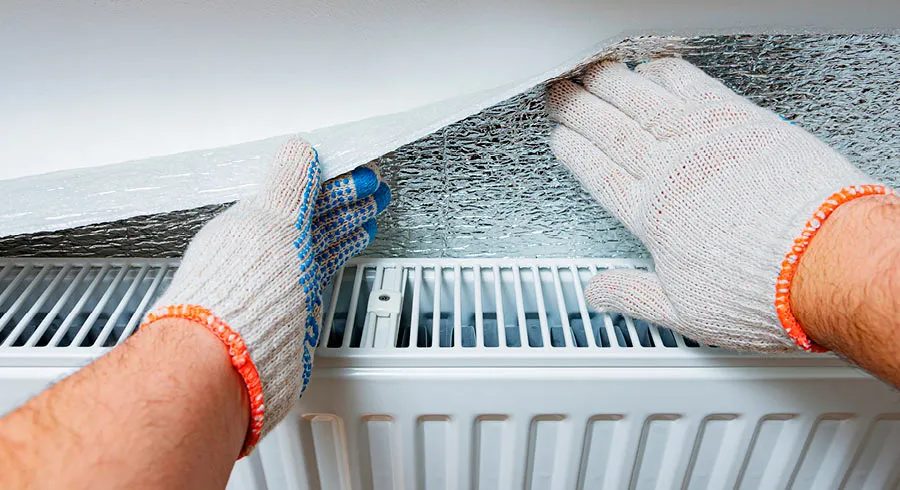
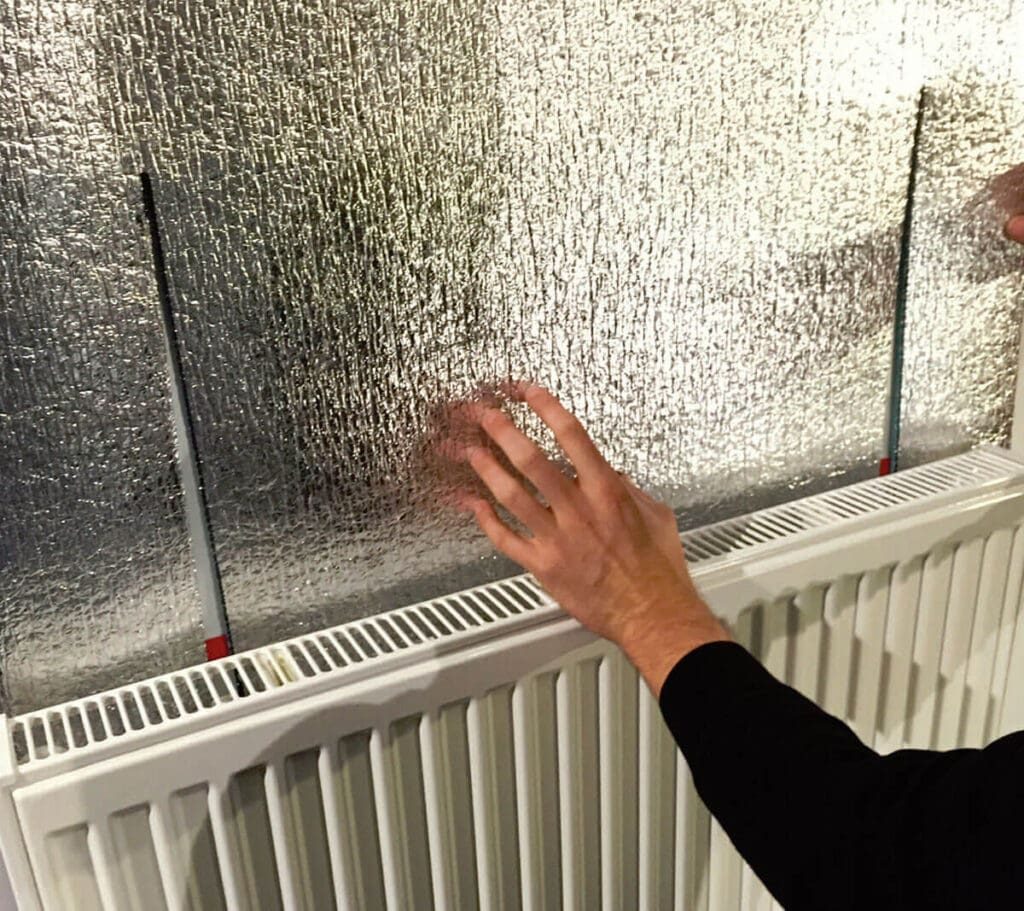
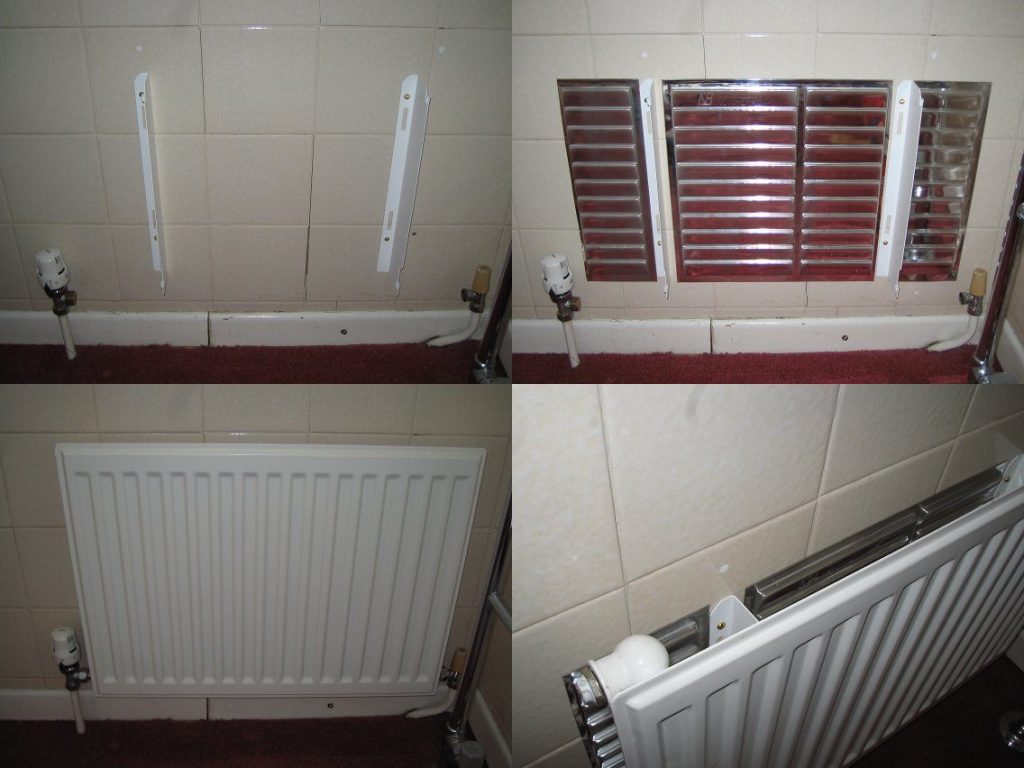
Examples of radiator-reflector installations
Why reflection can help
The underlying principle is reflection of infrared radiation: the reflector redirects some energy towards the room instead of allowing the wall to absorb it.
Key points:
Reflection affects only the radiant component of heat transfer, not convection or conduction.
The potential benefit is greater where the wall behind the radiator is poorly insulated.
With well-insulated walls, the additional benefit may be small.
The original article cites an Italian study reporting reductions of up to 8,8 % in heat lost towards an external wall under poorly insulated conditions. ResearchGate
It also cites an experiment reporting savings up to 6 % for the room concerned. These are study-specific figures, not guaranteed household savings. Wikipedia+1
Actual results depend on wall construction, insulation, temperature differences, radiator temperature, draughts and other conditions.
Limits to keep in mind
Practical limits include:
Little additional benefit in an already well-insulated building.
Dust, oxidation or deterioration reducing performance over time.
Only the radiation towards the wall is addressed, which may be a small share of total heat output.
The panel may be visible and affect the room's appearance.
There may be little benefit behind a radiator on an internal or well-insulated wall.
Ventilation, fabric, window and roof losses can be much more significant; a reflector is a small supporting measure.
The original article mentions forum users reporting a room-temperature difference of 0.5–1 °C or a similar reduction in heating settings. These are anecdotal observations, not a measured performance guarantee. Reddit+1
Other ways to reduce heating costs
For larger improvements, consider the wider building and heating system:
Wall and roof insulation: suitable insulation can address substantial fabric heat losses.
Efficient windows: appropriate double or triple glazing and well-sealed frames can reduce losses.
Draught-proofing: address unwanted gaps around doors and windows while maintaining required ventilation.
Shutters and blinds: closing suitable shutters at night can help reduce heat loss.
Heating controls and thermostatic valves: match temperatures and schedules to how rooms are used.
Brief, effective ventilation: air rooms appropriately without prolonged unnecessary heat loss.
Keep radiators clear: avoid furniture and curtains that obstruct warm-air circulation.
A suitable radiator reflector is a relatively simple, low-cost measure that may offer a modest benefit, especially behind radiators on poorly insulated external walls. It does not replace insulation or a well-designed heating system.
Treat it as a small part of an overall energy-saving plan, with realistic expectations and installation appropriate to the product and home.